Articles

Rehabilitation of a Subject with Papillon–Lefèvre Syndrome Using Patient-Specific Implants

Vol-1 Issue-1 Year-2026

Dr. Dr C. Sharath Babu1*, Dr. Bhavya Sri Kakumanu2, Dr. Naveen K3, Dr. Shrushti S Nagar4*, Dr R Viswachandra5

¹ MDS, FICOI, Prosthodontist and Implantologist, Head of Department, Dental Wing, Medicover Hospitals, Hi-tech City, Hyderabad, India
² BDS, General Dentist, Medicover Hospitals, Hi-tech City, Hyderabad, India
³ MDS, Oral and Maxillofacial Surgery, Medicover Hospitals, Hi-tech City, Hyderabad, India
⁴ BDS, Postgraduate in Periodontology and Implantology, SVS Institute of Dental Sciences, Mahbubnagar, India
⁵ MDS, DNB, Periodontics and Implantology, Professor and Head of Department, SVS Institute of Dental Sciences, Mahbubnagar, India

Author of Correspondence: Dr. Shrushti S Nagar, Postgraduate in Periodontology and Implantology, SVS Institute of Dental Sciences, Mahbubnagar

Email: shrushti.nagar@gmail.com

KEYWORDS:

papillon lefèvre syndrome, palmoplantar keratoderma, aggressive periodontitis, multidisciplinary strategy, oral rehabilitation, digital dentistry, selective laser melting (SLM), customized subperiosteal implants, patient specific implants-PSI.

Received date-02-03-2026
Accepted date-17-03-2026
Published date -22-03-2026

Citation format-Babu CS, Kakumanu BS, Naveen K, Nagar SS, Viswachandra R. Rehabilitation of a subject with Papillon Lefèvre syndrome with patient-specific implants. J Dent Innov Med Sci. 2026;1(1):26–32.

Abstract

Background: Oral Rehabilitation of patients with severe/advanced bone loss using state-of-the-art technology i.e., Patient-Specific Implants.

In this case report we are describing the oral rehabilitation of a 19-year-old male Papillon Lefèvre Syndrome (PLS) patient, who had insufficient remaining bone with Malo prosthesis supported by Patient Specific Implants (PSI) in both Maxilla and Mandible which is first of its kind. The patient’s functional, esthetic and psychological health all improved greatly as a result of prosthesis.

Conclusion: Use of PSI in maxillofacial surgery has consistent outcomes enabling more accurate reconstruction of maxillofacial defects and the complications that are usually encountered with non custom-made implants are not observed.


Introduction

Papillon-Lefèvre syndrome is a rare autosomal recessive disorder characterized by the development of palmoplantar hyperkeratosis with early – onset periodontitis that results in premature exfoliation of primary and permanent dentitions. It was first described by two French physicians, Papillon and Lefevre in 1924. It is caused by a mutation in the cathepsin C (CTSC) gene which is mapped on the long arm of chromosome 11 (11q14-q21).[1] This gene is important in the structural growth and development of the skin and appropriate immune response of myeloid and lymphoid cells. The cause of the periodontal disease and increased susceptibility to infection in PLS is due to decreased phagocytosis of polymorphonuclear leukocytes (PMNs). The prevalence of PLS is estimated to be about one per four million. It occurs evenly in both sexes. It has no racial predominance. Greater frequency of occurrence in consanguineous offspring has been noted approximately in one – third of the cases [2]. Diffuse palmoplantar keratoderma with erythematous plaques typically emerges between the ages of one and four years. The palms and soles are affected first, followed by the potential spread of psoriasiform hyperkeratosis to the dorsal surfaces of the hands and feet. Less frequently, lesions may also appear on the knees and elbows. These lesions get aggravated during cold. Skin lesions are initially followed by intense gingivitis, which quickly advances to periodontitis. Both primary and permanent teeth are affected. The child loses deciduous teeth by 4-5 years of age and the cycle repeats as aggressive periodontitis after the eruption of permanent teeth. Most of the successor teeth are lost by early teen years. Once the teeth are lost, the gingiva shows no further signs of periodontal changes [3]. PLS patients have increased susceptibility to cutaneous and systemic infections such as pyoderma, skin abscesses, furunculosis, respiratory tract infections. Other findings may include malodorous hyperhidrosis, nail dystrophy, follicular hyperkeratosis or dural calcifications [4]. Given PLS has a poor prognosis and an inevitable outcome, managing the condition is mainly symptomatic. For the overall management of the patient with PLS, a multidisciplinary strategy combining a team of pediatricians, dermatologists, and dental surgeons (pedodontists, oral and maxillofacial surgeons, prosthodontists, and periodontists) is essential. Oral retinoids have shown promising results in the treatment of skin lesions as they attenuate the palmoplantar keratoderma. Antibiotics, combined with proper oral hygiene and mouth rinses, are recommended to help slow the progression of periodontitis [3]. Ultimately remaining teeth are extracted and prosthetic rehabilitation is done. The prosthesis chosen is determined by various criteria such as the age of the patient, residual bone remaining, individual needs and preferences, along with the treatment cost and socio-economic status of the patient. Different treatment modalities including conventional partial or complete removable dentures, overdentures, modified and implant – supported complete dentures or a customized modification of these approaches are considered [5]. CAD/CAM implants / patient- specific implants (PSI) are becoming crucial in addition to these prefabricated implants in order to repair damaged anatomical structures with greater accuracy. These are being used in hemimaxillectomy cases following post COVID mucormycosis, Parry-Romberg syndrome, hemifacial microsomia, post-bilateral sagittal split osteotomy, post-craniotomy, post-free flap reconstruction, and post-traumatic secondary deformity, cleft lip and cleft palate patients, Le Fort 1 osteotomy [6]. This case report is about a young patient diagnosed with Papillon-Lefèvre syndrome and who was treated with Patient Specific Implants (PSI)/customized subperiosteal implants.
Case Report
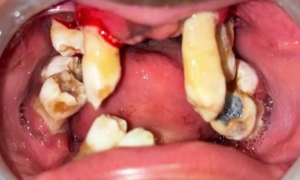
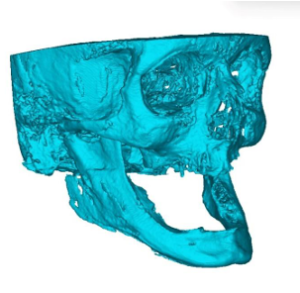
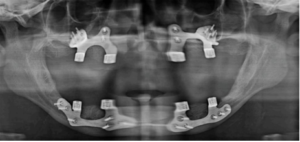
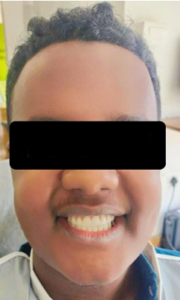
A 19-year-old male patient reported to the Department of Dentistry, Medicover Hospitals in Hi-tech City, Hyderabad, with a chief complaint of loosening of his teeth in both the jaws. History revealed that his deciduous teeth had erupted regularly, but by the time he was five years old, they had been exfoliated. He did not seek dental treatment at that time. The patient reported a medical history of Papillon Lefèvre syndrome, for which he is currently receiving treatment. Pregnancy and delivery were normal. Physical examination showed symmetric, well demarcated, white, rough, scaly and hyperkeratotic confluent plaques affecting the plantar surface of his soles and also the dorsum of the feet which had occurred at the age of three years and had progressed to the present state. The hands were swollen and red inspots [Figure 1a, 1b, 1c, 1d]. The palms, knees and elbows, on the other hand, were clear of keratosis. Intra – oral examination revealed the presence of 11 permanent teeth, five in the maxilla and six in the mandible (permanent maxillary right and left canine, maxillary left second premolar, maxillary right and left second molars; mandibular right canine, mandibular right first premolar, mandibular right and left second molars). All teeth present displayed Miller’s grade 3 mobility These teeth had erythematous and swollen gums that were also showing signs of gingival recession. The edentulous portions have normal mucosa without any signs of inflammation [Figure 2a]. The results of routine blood examinations and liver function tests were within normal limits. His panoramic radiograph showed generalized alveolar bone loss and Floating in the air – like appearance of the remaining teeth [ Figure 2b]. Based on these f indings, it was diagnosed as aggressive periodontitis. Considering the physical and mental well-being of the patient rehabilitation is strategized. The treatment planned was extraction of all teeth followed by Patient Specific Implant (PSI) placement under General Anesthesia. The patient was properly counseled to explain the risks and complications involved and his consent has been obtained. Teeth were extracted under Local Anesthesia (2%lignocaine with 1:200,000 adrenaline (epinephrine) two weeks before the surgery. Preoperative CT scan (computed tomography) was taken for three-dimensional (3D) evaluation of residual bone anatomy. The DICOM data from CT was used to create a virtual reconstruction of the remaining patient’s bone [Figure 3a]. Using this data, a 3D resin model was printed. Customized subperiosteal implants were designed virtually using the Geomagic software (3D systems, NC, USA), on the patient’s 3D virtual bone model following the surgeon’s guidance [Figure 3b]. The PSI was fabricated keeping surgical and prosthetic considerations in mind. These customized subperiosteal implants contain holes for fixing them to the remaining bone via osteosynthetic screws for anchorage and abutments to provide support for the fixed prosthesis. This DICOM file is converted into Standard Tessellation Language format (STL) which accurately represents the dimensions of the implant. These virtual models of subperiosteal implants were first printed in resin to check the accuracy on the patient’s 3D printed model. After the fit and accuracy were verified, the file was sent for 3D printing, where Selective Laser Melting (SLM) technique (which is essentially selective fusion of the titanium powder by a laser beam giving highly accurate results) was used to print the implants with a thickness of 1.5 mm. Once the implants were produced electrolytic polishing was done. After receiving the implants from the lab, they were sterilized in an autoclave. During the surgical procedure under general anesthesia, crestal incision was given and full thickness flap was raised in both the jaws, to expose the residual bone, where the custom made subperiosteal implants have to be placed. After the position, fit and accuracy were checked, the implants were fixed using the osteosynthetic mini screws. [Figure 4] Finally, flap was approximated and sutured using 3-0 Vicryl suture material. Following the procedure, the patient was prescribed IV antibiotics and analgesics for three days and changed to oral route for five days and the patient was advised to rinse with 0.12 % chlorhexidine mouthwash for five days. One week follow-up showed no signs of postoperative infection [Figure 5]. After one month of implant placement, scanning was done for impressions of both the jaws for implant prosthesis. Metal trial was done [Figure 6] and finally the Malo prosthesis was given above the titanium abutments [Figure 7a, 7b]. Prosthesis maintenance instructions along with oral hygiene instructions were given to the patient. There was no sign of a postoperative infection or PSI exposure over the patient’s six months of routine follow-up. A post-operative radiograph revealed that the PSI was fitted and positioned correctly [Figure 8].
Discussion

The Papillon lefèvre syndrome was originally described by 2 French physicians, Papillon and Lefevre in 1924. This syndrome is inherited as an autosomal recessive trait with a prevalence of 1 to 4 cases per million. This disorder is marked by palmoplantar hyperkeratosis and severe early-onset periodontitis, leading to the premature loss of both primary and permanent teeth. In the present case, the dermatological and the dental findings along with the history strongly suggest it to be the Papillon lefèvre syndrome. The differential diagnosis includes acrodynia (pinks disease), hypophosphatasia, cyclic neutropenia, keratosis punctata, Howel – Evanssyndrome, Grither syndrome. It differs from acrodynia with the absence of erythrocyanosis, muscle pain, tachycardia, psychic disturbances and teeth erupting prematurely with dystrophic enamel. Hypophosphatasia is differentiated from this syndrome by the presence of bowing of femur and tibia, knock – knee, enlarged wrists, hypoplastic teeth and increased amounts of phosphoethanolamine in the urine. Unlike PLS, Howe-Evans syndrome, Greither’s syndrome, keratosis punctata do not have periodontopathic; cyclic neutropenia does not present with palmoplantar hyperkeratosis.[3] Treatment of PLS patients is symptomatic and often ineffective. Early management of the periodontal destruction includes eliminating the reservoir of causative organisms, using conventional periodontal treatment, oral hygiene instructions, antiseptic mouth rinses and systemic antibiotic therapy. During the growth period, prosthetic therapy is necessary, and periodontal maintenance may allow the patient to maintain a part of their dentition. Failure to respond to antibiotic therapy is significant in the treatment of PLS. The prosthetic approach is an age specific treatment. At an early age, during deciduous or mixed dentition period extraction of all the primary and permanent teeth followed by replacement with removable prosthesis. Some authors described the use of titanium implants [7]. Bilal Ahmed et al described the treatment plan of extracting the remaining teeth and giving a removable complete denture with bilateral balanced occlusion in a 17-year-old female patient [8]. Leila Ahmadian et al used premade endosseous dental implants in a 21-year-old female patient [9]. For partially or fully edentulous patients, endosseous dental implants offer a reliable prosthetic solution, but they require adequate bone height and width for successful placement. In cases of severe bone atrophy, regenerative procedures like bone grafting, guided bone regeneration, ridge splitting, distraction osteogenesis, and sinus augmentation are often necessary. However, these complex techniques are costly, time-consuming, and may still result in residual facial asymmetry due to limitations in addressing specific defects. Digital revolution has transformed the dental field significantly in the current day. New acquisition techniques, new materials, processing and fabrication tools like computer-assisted design/computer assisted manufacturing (CAD/CAM) software have significantly changed the field of dentistry. In the case of 3D printers, unlike resin materials that were available in the early days, it is currently possible to print t itanium materials that have already been verified for biocompatibility as dental implants. Today’s innovative Additive Manufacturing techniques such as direct metal laser sintering (DMLS) and selective laser sintering (SLS) and selective laser melting (SLM) processes make it possible to create customized grids and implants that precisely match each patient’s unique anatomical needs. By using these technologies, some of the older methods, such as subperiosteal implants, can be revisited and reinterpreted in a contemporary and digital manner [10]. By utilizing the modern technologies, combining the traditional subperiosteal implant designs with 3D imaging and printing can save treatment time and support fixed prostheses in advanced / severe bone loss / atrophy cases. Since they are customized for each patient, they restore the defect in a way that ensures both functional and aesthetic satisfaction and well-being.

Conclusion

The prosthetic rehabilitation to achieve the desired anatomical, functional and esthetic requirements still remains a challenge when there is insufficient bone left. The traditional approaches are unable to provide complete justification. Each of these needs can be addressed by combining the most recent developments in digital dentistry with conventional treatment methods. PSI is one such treatment modality. The use of PSI for maxillofacial reconstruction has great patient satisfaction, predictable results, and no usual complications that come with non-custom-made implants. The biggest disadvantage being its expensive cost.
Conflict of Interest: Nil
Ethical consent was obtained from the patient. Institutional Review Board approval was not required for this study. 

References
  1. Wani AA, Devkar N, Patole MS, Shouche YS. Description of two new cathepsin C gene mutations in patients with Papillon-Lefèvre syndrome. J Periodontol. 2006; 77:233-7.
  1. Hart TC, Shapira L. Papillon-Lefèvre syndrome. Periodontol 2000. 1994; 6:88-100.
  1. Sreeramulu B, Shyam ND, Ajay P, Suman P. Papillon-Lefèvre syndrome: clinical presentation and management options. Clin Cosmet Investig Dent. 2015 15; 7:75-81.
  1. Pareek SS, Al-Aska AK. Papillon-Lefevre syndrome. A report of six cases in one family. Int J Dermatol. 1986; 25:638-41.
  1. Phull T, Jyoti D, Malhotra R, Nayak S, Modi H, Singla I, P A. Diagnosis and Management of Papillon-Lefevre Syndrome: A Rare Case Report and a Brief Review of Literature. Cureus. 2023 11;15: e43335.
  2. Joshi S, Salema HJ, Pawar S, Nair VS, Koranne V, Sane VD. Patient-Specific Implants in Maxillofacial Reconstruction – A Case Report. Ann Maxillofac Surg. 2023; 13:258-261.
  1. Abdulwasi H, Dhanrajani PJ, Jiffry A. Papillon-Lefèvre syndrome. Reappraisal of etiology, clinical features and treatment. II. Oral rehabilitation using osseointegrated implants. Indian J Dent Res. 1996; 7:63-70.
  1. Ahmed B. Prosthodontic rehabilitation of Papillon Lefevre Syndrome. J Coll Physicians Surg Pak. 2014; 24 Suppl 2: S132-4.
  1. Ahmadian L, Monzavi A, Arbabi R, Hashemi HM. Full-mouth rehabilitation of an edentulous patient with Papillon-Lefèvre syndrome using dental implants: a clinical report. J Prosthodont. 2011; 20:643-8.
  1. Javaid M, Haleem A. Current status and applications of additive manufacturing in dentistry: A literature-based review. J Oral Biol Craniofac Res. 2019; 9:179-185.


Figures
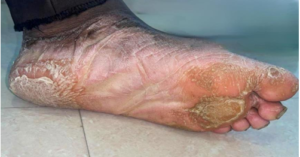
Extraoral image – Left foot dorsal surface
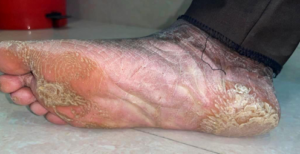
Figure 1a: Extraoral image – Left foot dorsal surface

Extra oral image – Right foot dorsal surface
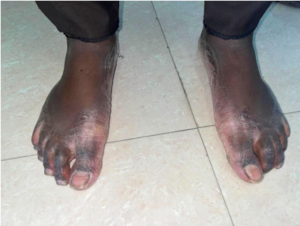
Figure 1b: Extra oral image – Right foot dorsal surface

Extra oral image – Right foot dorsal surface

Figure 1c: Extra oral image – Both feet
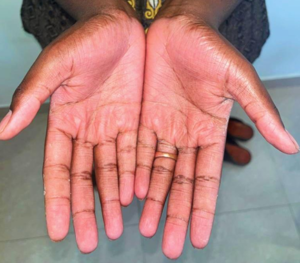
Extraoral image – Palms

Figure 1d: Extraoral image – Palms

Preoperative Intra-oral image

Figure 2a: Preoperative Intra-oral image
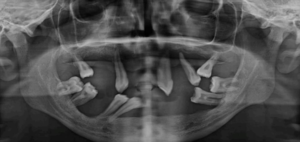
Preoperative OPG

Figure 2b: Preoperative OPG

3D resin model made from DICOM data from CT
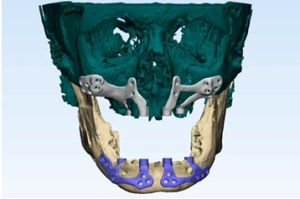
Figure 3a: 3D resin model made from DICOM data from CT

Figure 3b: Customized subperiosteal implants designed virtually 3D virtual bone model
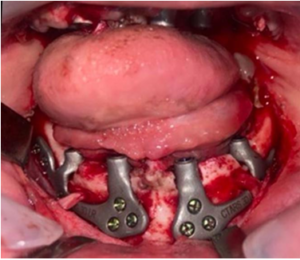
Figure 3b: Customized subperiosteal implants designed virtually 3D virtual bone model

Intraoperative image

Figure 4: Intraoperative image

Post-operative OPG after placement of implants
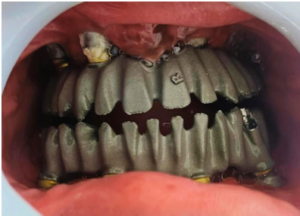
Figure 5: Post-operative OPG after placement of implants

Metal trail

Figure 6: Metal trail

Smile after final prosthesis placement
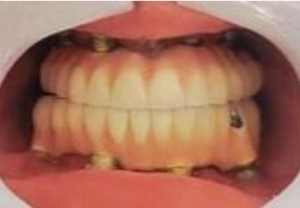
Figure 7a: Smile after final prosthesis placement

Intraoral image after final prosthesis placement
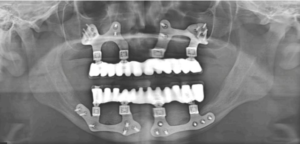
Figure 7b: Intraoral image after final prosthesis placement

Postoperative OPG after final prosthesis placement

Figure 8: Postoperative OPG after final prosthesis placement

Dr. Harshitha Akkinepally

About Author

Leave a Reply

Your email address will not be published. Required fields are marked *

Explore articles and journal information

Explore peer-reviewed articles, journal policies, author guidelines, and editorial information from JDIMS.

Copyright @Idea Spring Journals 2026. All Rights Reserved.